

the #thoughtops blog
security | ai | technology | policy | startups
Founder of Bugcrowd & disclose.io, pioneer of crowdsourced security as-a-service, principal of Tall Poppy Group. Sharp takes on breaking things, building things, fixing things, and the economics in between.
Featured
Hacker Summer Camp Tips and Tricks
As I've been thinking about Hacker Summer Camp (aka Blackhat, BSides Las Vegas, DEF CON, and all of the associated and adjacent cons and Vegas things) this year, it occurred to me that there are going to a LOT of new founders and operators roaming the desert this year.
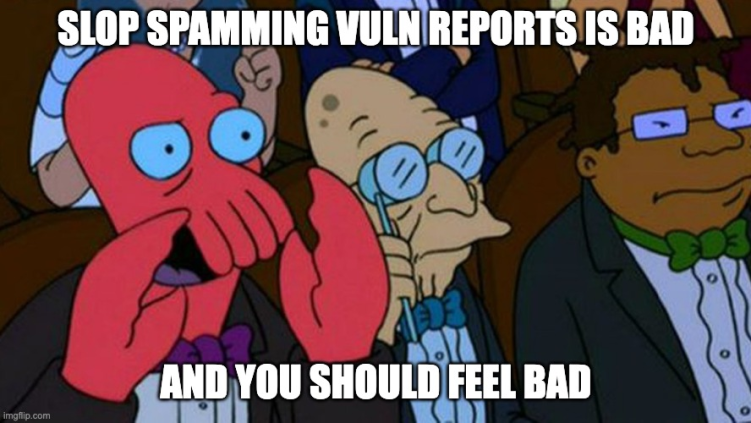
Thoughts on the #slopdemic
Move over #vulnpocalypse — there's a new term we need to talk about: the #slopdemic. AI didn't invent low-quality vuln reports, but it just turbocharged them, and F/OSS is drowning.

Offense Scales with Compute. Defense Scales with Committees.
Why AI is widening the attacker-defender gap faster than anything we've built to close it — and what that actually means for the next decade of security.

Vulnerability economics
The four-line economic frame for every vulnerability: cost to introduce, cost to discover, cost to fix, and the value of exploitation — and why the math matters.
Next things...
Last Saturday Jan 31 was my last day "inside the tent" at Bugcrowd.

2026 security predictions
2026 cybersecurity forecast: China's PLA centenary looms, AI turns anyone into a malware developer, and economic pressure pushes more people toward cybercrime. Shift-left finally start working—but only for modern code. The rest of the internet? A triage trash fire.

The Original Bug Bounty: Alfred Hobbs and the Great Lock Controversy of 1851
Alfred Hobbs: The OG bug bounty hunter who cracked England’s ‘unpick-able’ locks. His breaker mindset exposed flaws, sparked innovation, and proved no system is perfect.

AI security: Tool, Target, Threat
The Tool/Target/Threat taxonomy for AI security — a shared vocabulary for the three orientations every conversation collapses without, built during EO 14110.
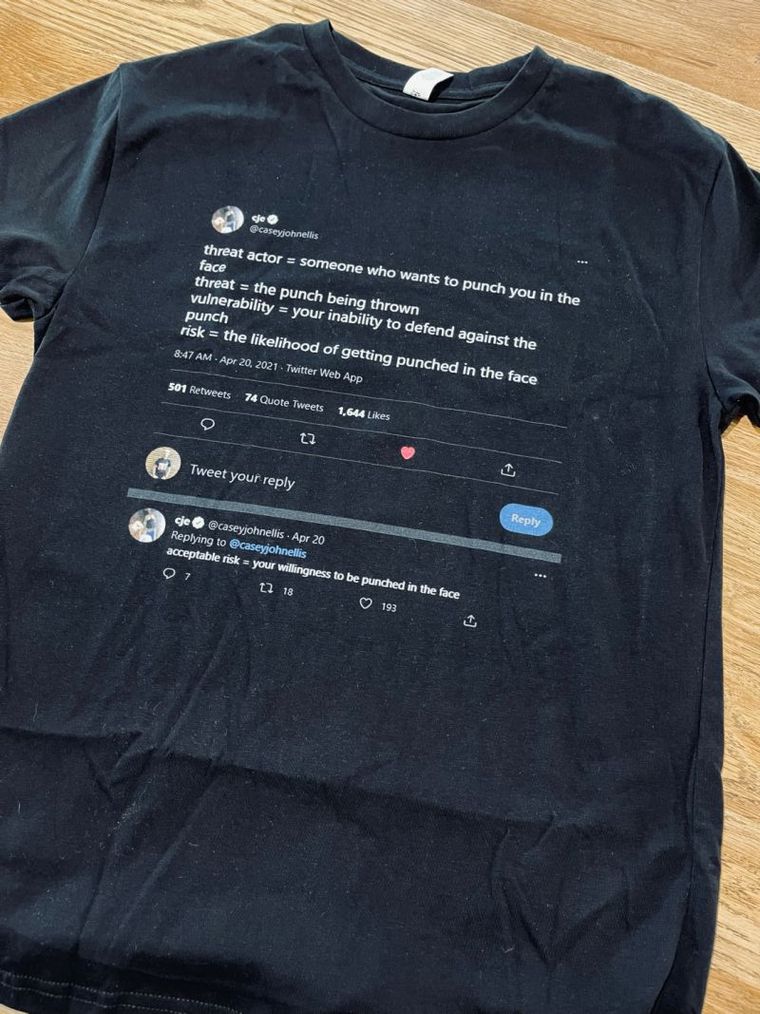
The Bar Fight Risk Taxonomy
After hearing "vulnerability" and "threat" used interchangeably for a >9,000th time I decided to do something about it, and the Bar Fight Risk Taxonomy was born.

Information Asymmetry and the 1950s Nuclear Bounty
Props to Matt Ploessel for calling out this one... I'd not heard of a bounty around nuclear weapons until today.
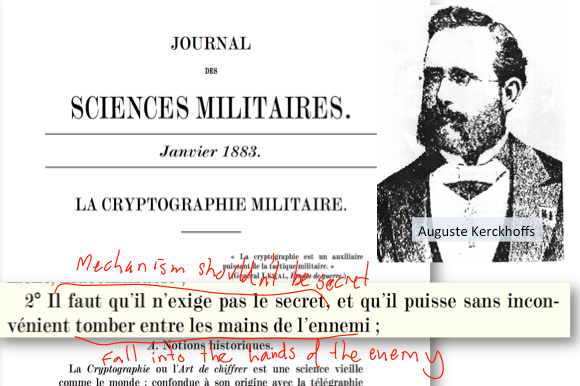
To err is human — Kerckhoffs' Principle in Software Transparency
Shannon and Kerckhoff were pioneers of disclosure thinking — They understood the concept of “build it like it’s broken”. This was especially true in WWII cryptography, but it’s becoming increasingly clear in its relevance to the 'peacetime' software that we use today.
Latest
All →
Dichotomies
If you follow me on the socials, you might have noticed me saying that "I miss nuance" a number of times lately. I thought I'd try to shake out few takes on some of the less-productive "camps" I've seen forming over the past few weeks.

Needle problem? Just drop a haystack on it
AI cut the cost of sending a submission to almost nothing, so signal and noise both went up by a factor of ten. The triage queues were built to never miss, and that's exactly what's breaking. Some empathy for triagers, a bit of ownership, and what I'd actually change.
![Title slide: Don't be the tooling, build the tooling. Casey Ellis, [un]prompted.au, Sydney 2026, on a purple disclose.io background.](https://storage.ghost.io/c/ec/8a/ec8abb38-39b9-4422-95b9-695b2a5e652e/content/images/size/w760/2026/09/dont-be-the-tooling-build-the-tooling-header.png)
Don't be the tooling, build the tooling: [un]prompted.au talk
Slides from my [un]prompted.au talk on using AI to build deterministic tooling, with lookup.disclose.io as the worked example.
AI and bug bounties: notes from 68 minutes on Across the Pondcast
68 minutes with Tib3rius and Andy Swift on Across the Pondcast, cut down to the salient points and timestamped: how Bugcrowd started, what AI has actually done to bug bounty, why a VDP is the sane fallback, and where researchers should point next.
A lot of people are just sitting on zero-day right now
I sat down with Ashish Rajan on the AI Security Podcast after Black Hat. The bit worth writing down: the triage queues are noisy enough that good researchers are sitting on zero-day. Plus export controls, attack graphs, port 3000, and why leaders should go use this stuff at home.
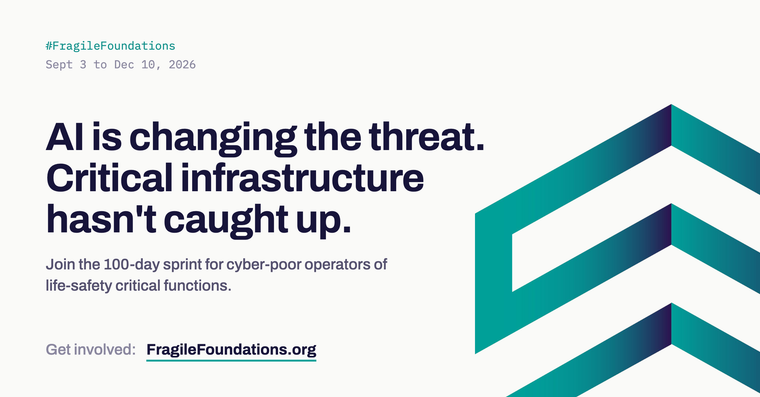
Fragile Foundations: 100 days on the cyber-poor
A 100-day sprint on the AI and cyber disruption of water, power, and emergency care, aimed at operators Josh Corman calls cyber-poor. The threats come from cyber, but most of the fixes come from engineering. If you find bugs for a living, there's a translation job that mostly doesn't exist yet.
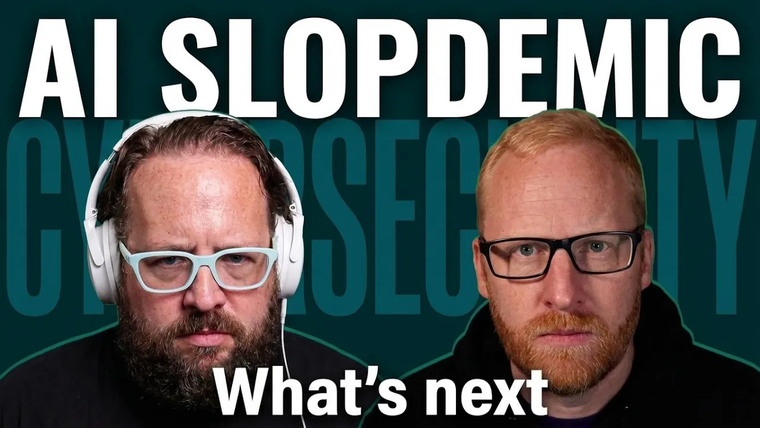
Hacker Summer Camp and notes from 63 minutes on the "slopalcious" slopdemic
63 minutes with Aaron Mog on Zero Sum, cut down to the salient points and timestamped: the slopdemic, the two axes, why the vulnpocalypse hasn't happened yet, and who is still hiring juniors.

Notes from Hacker Summer Camp 2026
I've been trying to compile a raft of notes and thoughts into a post, but I'm thinking that the ol' bullet-point dump is going to be the way to go here...

Non-Cooperative Defense and Impermissive Access
wp2shell handed the quiet policy debate about non-cooperative defense its first civilian-scale live-fire exercise.
Wake Me After the Vulnpocalypse
AI industrialized the discovery of vulnerabilities, not the exploitation of them, and that distinction is the whole argument. What we have is a slopdemic. The fragility was always there, and the real exposure is the gap between instant discovery and human-speed remediation.
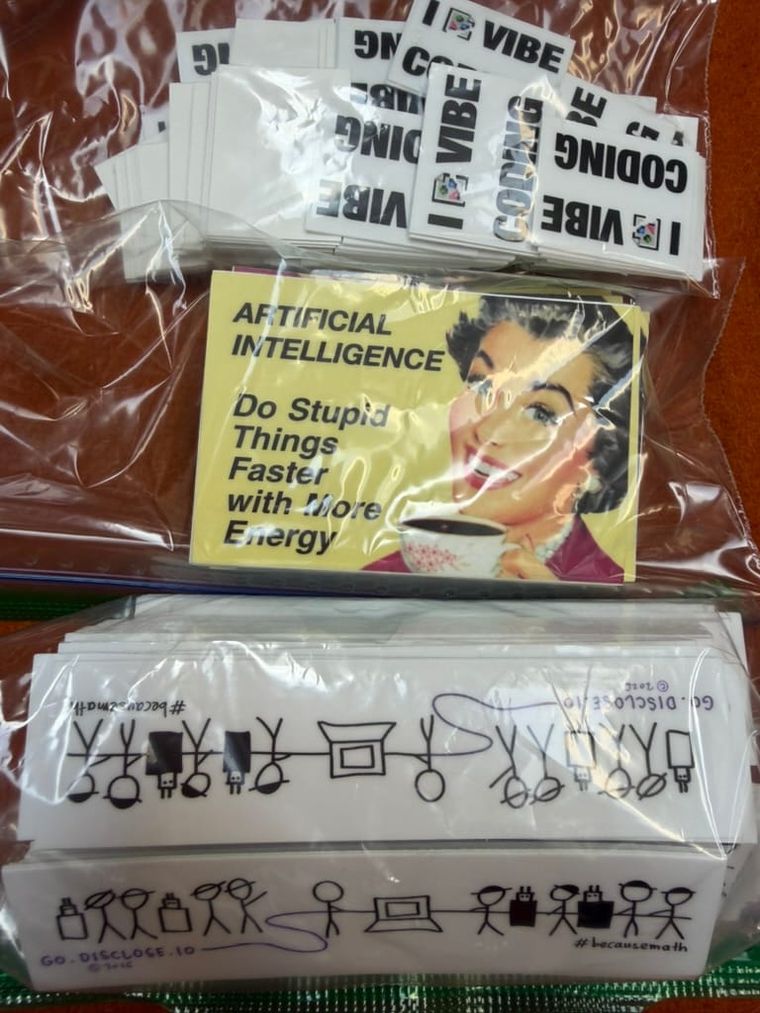
My moves for Hacker Summer Camp 2026
...and away we go! Here's (roughly) what I'll be up to this week: Monday BSides Las Vegas for the I Am The
Hacker Summer Camp Tips and Tricks
As I've been thinking about Hacker Summer Camp (aka Blackhat, BSides Las Vegas, DEF CON, and all of the associated and adjacent cons and Vegas things) this year, it occurred to me that there are going to a LOT of new founders and operators roaming the desert this year.
Hot Takes
All →Systems, not bugs
The folk doing really cutting-edge vulnerability research right now: if you peel the paint off how they&
Security is an afterthought, and that's economics
There are some black pill truths around security (the "nothing's ever going to change"
I can just do stuff
Personally, I'm hacking on stuff again. With AI in the toolkit it feels kind of like
The law matters less than the legal team
I'm not a lawyer, and if I was, I'm not your lawyer. With anti-
The hackers weren't lying
A lot of what's actually happening right now is people realizing that, no, the hackers weren&
Fixing everything is a fool's errand
Vulnerability management is a bit of a fool's errand if your goal is to make sure